


Table of Contents
- Marine Canvas vs Vinyl Enclosures: Key Differences
- Material Properties and Construction
- Weather Protection and Waterproofness
- Visibility and Optical Clarity in Clear Vinyl Boat Enclosure Panels
- Marine-Grade Canvas Waterproof Performance and Durability
- Marine Canvas and Vinyl Maintenance and Care
- Custom Boat Canvas Enclosure Selection and Installation
- Lifecycle Cost and Repairability
- Frequently Asked Questions
Last Updated: October 11, 2026
Marine Canvas vs Vinyl Enclosures: Key Differences
Choosing between marine canvas vs vinyl enclosures depends on your priorities: visibility, durability, weather protection, or maintenance ease. Both protect your vessel, but they excel in different situations. Here’s what separates them.
Both shield your boat’s interior from sun, rain, and salt spray, but material properties, aging, and maintenance demands differ significantly.
Material Properties and Construction
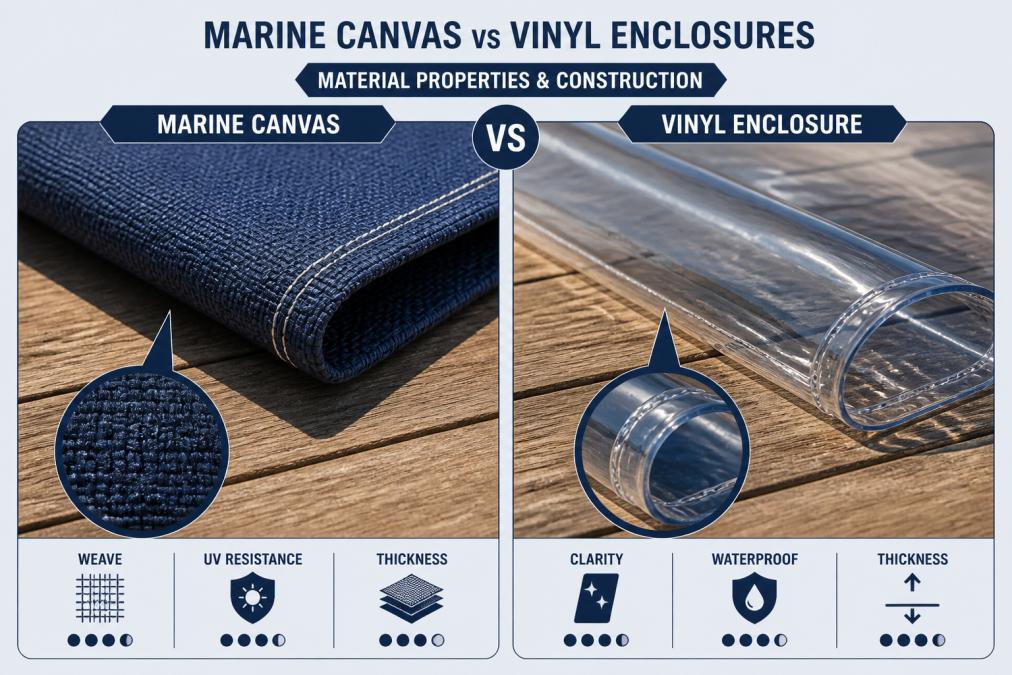
Marine canvas typically uses 100% acrylic fabrics like Sunbrella Marine Fabric, which combines breathability with water resistance. The acrylic construction resists UV degradation and holds color well over time. Vinyl-coated alternatives, such as Stamoid and Top Gun coated polyester, prioritize maximum waterproofness by layering vinyl over fabric backing. Clear vinyl, commonly 40-gauge, offers transparency but trades some durability for visibility.
Acrylic and Polyester Canvas
Sunbrella Marine Fabric’s 100% acrylic construction allows air circulation, reducing condensation and mildew risk. Top Gun coated polyester prioritizes abrasion resistance, valuable if your enclosure contacts rigging or rough handling.
Clear Vinyl and Vinyl-Coated Fabrics
Clear vinyl provides unobstructed visibility and remains flexible, but clouds over time from UV exposure. Vinyl-coated fabrics like Stamoid seal out moisture completely but are less breathable, trapping condensation during temperature swings.
Weather Protection and Waterproofness
Acrylic canvas resists water through tight weave density; vinyl-coated materials create a physical barrier on top. Both rely on properly sealed seams for reliable protection during heavy rain or saltwater spray.
Both fail fastest at seams and zippers. Professional installation and annual seam inspection extend the life of either option significantly.
Visibility and Optical Clarity in Clear Vinyl Boat Enclosure Panels
Clear vinyl panels deliver immediate visibility for navigation and views. The 40-gauge thickness balances flexibility with integrity. However, UV exposure causes cloudiness within 3-5 years, requiring replacement rather than repair.
Acrylic canvas offers no visibility but accepts separate clear vinyl window panels, letting you choose visibility where needed while maintaining durability.
Marine-Grade Canvas Waterproof Performance and Durability
Marine canvas with proper sealing delivers waterproof performance comparable to vinyl-coated alternatives. The key advantage is breathability: acrylic canvas allows moisture vapor to escape, reducing condensation in humid climates or temperature swings.
UV Resistance and Service Life
Sunbrella Marine Fabric resists UV degradation and maintains appearance for 7-10+ years. Vinyl-coated fabrics resist UV well but can become brittle with age. Clear vinyl clouds within 3-5 years.
Saltwater and Oil Resistance
Acrylic canvas resists saltwater corrosion naturally but can stain from heavy grease or fuel. Vinyl-coated materials repel both saltwater and oils effectively, ideal for high-salt environments, but can crack or peel in cold conditions.
Marine Canvas and Vinyl Maintenance and Care
Canvas enclosures require regular cleaning with mild soap and fresh water to prevent mildew and salt buildup. Avoid pressure washers. Inspect seams annually and reseal if cracks appear.
Vinyl-coated enclosures tolerate harsher cleaning but require UV protection when idle. Clear vinyl clouds from installation onward; UV covers are the only prevention strategy.
| Maintenance Task | Marine Canvas | Vinyl-Coated | Clear Vinyl |
|---|---|---|---|
| Routine Cleaning | Mild soap, fresh water | Mild soap or stronger cleaners | Mild soap only |
| Seam Inspection | Annual | Annual | Annual |
| Resealing | Every 2-3 years | Every 3-5 years | Every 2-3 years |
| UV Protection | Moderate (acrylic resists well) | Good | Poor (clouds over time) |
| Condensation Risk | Low (breathable) | High (sealed) | Moderate |
Custom Boat Canvas Enclosure Selection and Installation
Choosing the right enclosure material requires matching properties to your climate, boating season, and use case.
Climate-Based Material Selection
High-UV and sunny climates (Southwest, South, Southeast): Acrylic marine canvas with Sunbrella fabric is the strongest choice. Clear vinyl clouds within 2-3 years in intense sun.
Humid and coastal/saltwater environments (Atlantic Coast, Gulf Coast, Great Lakes): Vinyl-coated fabrics like Stamoid excel here. Acrylic canvas also performs well with annual seam inspection, offering reduced condensation. Avoid clear vinyl unless you replace it every 3-4 years.
Cold climates (Northern regions, Great Lakes, Northeast): Acrylic marine canvas is the most reliable choice. Vinyl-coated materials crack or peel during freeze-thaw cycles. Canvas remains flexible and reduces interior condensation during temperature swings.
Moderate, variable climates (Mid-Atlantic, Midwest, Pacific Northwest): Both perform adequately. Canvas requires more hands-on care but offers better breathability and lower long-term cost. Vinyl-coated materials demand less maintenance but cost more upfront.
Seasonal vs. Year-Round Use
Seasonal boats (spring through fall storage): Clear vinyl becomes practical because you can replace it before the next season. Vinyl-coated materials also work well with minimal off-season maintenance.
Year-round boats: Acrylic marine canvas is the most economical choice over time. Clear vinyl is not recommended unless you plan to replace it every 3-4 years.
Condensation, Ventilation, and Interior Comfort
One overlooked trade-off is breathability and its effect on interior comfort, critical in enclosed spaces like flybridge enclosures or fishing boat cabins.
Acrylic marine canvas is breathable. Moisture vapor passes through the weave, preventing condensation pooling and reducing mildew, mold, and equipment corrosion, a significant advantage in humid climates or variable temperatures.
Vinyl-coated fabrics and clear vinyl are non-breathable. They trap humidity inside, causing condensation on cool mornings or when idle. This can drip onto upholstery and equipment, accelerating corrosion. Mitigate with active ventilation: open windows, use dehumidifiers, or install ventilation ports.
For boats in humid climates or those that sit idle frequently, acrylic canvas’s breathability is a significant advantage. For boats in dry climates or continuous use, vinyl’s non-breathable nature is less problematic.
Call us today for a free estimate →
Material Compatibility and Hybrid Enclosures
Many boat owners combine materials strategically: canvas main enclosure with clear vinyl windows for durability and visibility; vinyl-coated fabric with canvas reinforcement in high-wear areas; or removable clear vinyl panels for seasonal replacement.
When combining materials, ensure seams are properly sealed and transitions are reinforced. Incompatible materials can create stress points where water ingress occurs.
Installation Details and Frame Fit
Precise measurement is non-negotiable. Even quarter-inch errors compound across seams, creating gaps that compromise weather protection. Request a professional site visit to verify dimensions.
Proper tension is critical during installation. Material must be stretched evenly to shed water; loose panels trap water, over-tensioned panels tear. Experienced installers achieve consistent tension and seal seams with marine-grade sealant.
Use stainless steel fasteners for saltwater resistance. Double-stitch seams with UV-resistant thread and seal with marine-grade polyurethane or silicone. Lubricate marine-grade zippers regularly with silicone spray.
Measure twice, order once. Request a site visit from your enclosure provider to verify dimensions in person. Take photos of the frame from multiple angles and note any obstacles. This investment in accuracy prevents costly errors and ensures proper fit.
Warranty and Professional Installation
Reputable providers offer warranties on Sunbrella materials and workmanship, covering seam failure, material degradation, and UV issues but excluding improper maintenance, accident, or extreme weather.
Professional installation is worth the cost. Experienced installers achieve proper tension, seal seams correctly, and ensure long-term performance, the difference between 5-year and 10+ year enclosures.
Lifecycle Cost and Repairability
Purchase price alone masks true cost of ownership. A lifecycle analysis includes initial cost, maintenance, repairs, and replacement, each varying by material and climate.
Initial Purchase and Installation
Acrylic canvas costs less upfront than vinyl-coated alternatives; clear vinyl is lowest initially but erodes quickly with maintenance and replacement. Professional installation is worth the investment regardless of material choice.
Maintenance and Repair Costs Over Time
Acrylic canvas requires annual seam inspection and resealing every 2-3 years. Small tears patch. Mildew prevention is low-cost owner maintenance.
Vinyl-coated materials require less frequent seam maintenance (every 3-5 years) and tolerate harsher cleaning methods, reducing labor costs. However, vinyl-coated enclosures cannot be easily patched if the coating tears; the repair often requires replacing an entire panel section. Clear vinyl sits between these extremes: inexpensive to maintain initially, but once cloudiness appears (typically 3-5 years), no cleaning or treatment restores clarity. Replacement becomes the only option.
Replacement and End-of-Life Costs
A well-maintained acrylic marine canvas enclosure remains serviceable for 10-12 years or longer. When replacement finally becomes necessary, the material itself is recyclable, and removal costs are minimal. Total lifecycle cost for a canvas enclosure over 12 years typically includes installation, maintenance, and minor repairs.
Vinyl-coated enclosures often last 8-10 years with proper care, requiring full replacement sooner than canvas. Replacement cost mirrors the original installation, so a second enclosure over a 15-year boat ownership period adds significant expense. Clear vinyl enclosures, despite lower initial cost, often require replacement twice in the same timeframe, at 5 years and again at 10 years, making total lifecycle cost comparable to or higher than canvas, despite the lower per-unit price.
Repairability and Panel Replacement
Canvas and vinyl-coated materials both accept patches, though visibility and longevity differ. A canvas patch blends reasonably well with the surrounding fabric, especially if the repair uses matching Sunbrella material. Vinyl-coated patches are more visible and may create a slight texture difference at the seam. Both hold reliably if applied by a professional.
Clear vinyl cannot be patched once cloudiness appears; the degradation is cosmetic but irreversible. Scratches and minor damage can be addressed with vinyl repair kits, but deep gouges or seam failures require panel replacement. Individual clear vinyl panels can be replaced, depending on size and frame configuration.
Canvas panels can be individually replaced if a section becomes damaged beyond repair, though this is rare. The modular nature of canvas enclosures makes partial replacement feasible and cost-effective. Vinyl-coated panels are similarly replaceable but at higher per-panel cost.
Climate-Adjusted Lifecycle Projections
In high-UV environments (southern and southwestern regions), acrylic marine canvas retains its appearance and structural integrity longer than vinyl-coated materials, which can become brittle. Clear vinyl clouds noticeably faster in these climates, often within 2-3 years rather than 3-5.
In humid or saltwater-heavy climates (coastal regions, Great Lakes), vinyl-coated materials resist corrosion and moisture penetration more effectively than canvas, potentially justifying higher upfront cost through reduced maintenance.
In cold climates, vinyl-coated materials can crack or peel if flexed repeatedly during freezing temperatures. Canvas remains flexible in cold and does not suffer this degradation. Owners in northern regions should factor in the reduced lifespan of vinyl-coated materials or choose canvas for year-round reliability.
Total Cost of Ownership Comparison
Over a 12-year ownership period, a typical boat owner can expect varying total costs depending on the material chosen, including installation, annual inspections, seam resealing, and potential repairs or replacements.
The true cost winner depends on your climate, how often you use the boat, and your tolerance for maintenance. Canvas favors owners willing to perform annual inspections and those in variable-temperature climates. Vinyl-coated materials suit owners in stable, high-salt environments who prefer less frequent maintenance. Clear vinyl is economical only if you replace it on schedule and accept reduced visibility as it ages.
Frequently Asked Questions
What is better for a boat enclosure, canvas or vinyl?
The choice depends on your priorities. Marine canvas offers superior durability, breathability, and a traditional appearance, with a typical service life of 10+ years when properly maintained. Clear vinyl enclosures provide excellent visibility and waterproofness but may cloud over time and offer less breathability. Canvas works better in humid climates where condensation is a concern; vinyl excels when maximum water protection is the priority. Many boat owners combine both, using canvas panels with clear vinyl windows for balanced performance.
Is marine-grade canvas waterproof?
Marine-grade canvas is water-resistant, not fully waterproof. Quality marine canvas fabrics like Sunbrella use acrylic or coated polyester construction that sheds water effectively and dries quickly, but water can penetrate the weave over time under sustained pressure. Vinyl-coated canvas (like Stamoid) offers maximum waterproofness by design. For complete waterproofing, clear vinyl or vinyl-coated materials are better choices. Proper sealing of seams and regular maintenance significantly improve canvas water resistance.
How long do clear vinyl boat enclosures last?
Clear vinyl typically lasts 5-7 years before optical clarity degrades from UV exposure and weathering, though the material remains functional. High-quality 40-gauge vinyl holds its shape better than thinner grades and resists yellowing longer. Lifespan varies by sun exposure, climate, and maintenance. Marine canvas generally outlasts clear vinyl by 3-5 years, reaching 10+ years with proper care. UV-protective treatments and keeping vinyl covered when not in use can extend service life significantly.
Can canvas and clear vinyl be combined in a boat enclosure?
Yes, combining canvas and clear vinyl is a practical and popular approach. Use durable marine canvas for side panels and rear sections, where durability and breathability matter most, and clear vinyl for front windows where visibility is essential. This hybrid design balances weather protection, condensation control, and sight lines. It also allows you to replace individual panels separately, vinyl windows can be upgraded without replacing the entire enclosure. Custom boat canvas enclosures often use this mixed-material strategy for optimal performance.