



Table of Contents
- Why Sunbrella Fabric Durability Holds Up on Boats
- How Long Does Marine Canvas Last in Real Conditions?
- Sunbrella vs Vinyl Marine Upholstery: Which Lasts Longer?
- What Breaks Down Sunbrella Fabric on Boats
- Sunbrella Marine Fabric Cleaning Tips for Long Life
- Repair, Patching, and When to Replace Marine Canvas
- Cost Per Year: Is Sunbrella Worth It Over Time?
- Conclusion
- Frequently Asked Questions
Last Updated: September 20, 2026
Why Sunbrella Fabric Durability Holds Up on Boats
Sunbrella fabric durability for boats comes down to one manufacturing decision: the pigment goes into the fiber before the fiber is formed, not onto it afterward. That single choice explains why solution-dyed acrylic holds its color through years of salt, sun, and spray while ordinary dyed fabrics fade from the outside in.
Solution-Dyed Acrylic and Fiber Integrity
Solution-dyed acrylic is a synthetic fiber in which color pigments are added to the liquid acrylic before extrusion, so each filament carries its color all the way through. Because the pigment is part of the fiber itself, UV exposure and saltwater contact cannot strip it the way they strip surface-dyed textiles. The fiber also resists rot and mildew growth, which matters in humid coastal air where cotton and untreated canvas break down quickly.
How Sunbrella Compares to Marine Vinyl
Marine vinyl is a coated product: a polyester or knit backing covered with a PVC skin. It wipes clean easily and shrugs off spilled drinks, which makes it a common pick for boat seating. Sunbrella is a woven textile, so it breathes where vinyl traps heat and moisture. Neither material is universally better.
| Factor | Sunbrella (solution-dyed acrylic) | Marine Vinyl (PVC-coated) |
|---|---|---|
| Color retention | Pigment runs through the fiber | Surface color can crack or peel |
| Breathability | High; resists trapped moisture | Low; traps heat and condensation |
| Cleaning | Mild soap and water | Wipe-down, often bleach-cleanable |
| Repair | Sewn patches, re-stitching | Patch kits, replacement panels |
| Best for | Covers, bimini tops, enclosures | Seat cushions, bolsters |
How Long Does Marine Canvas Last in Real Conditions?
A well-built marine canvas cover or enclosure typically delivers eight to twelve years of service in coastal conditions when it is cleaned regularly and re-stitched before seams fail. That range assumes marine-grade thread, correct tension, and prompt attention to small tears. Neglected canvas can fail in half that time, and the failure almost always happens in the thread, zippers, or hardware rather than in the acrylic itself.
Service Life by Exposure Zone
Longevity is not one number. It is a function of how much direct sun, salt, and standing moisture a panel sees. A common pattern among canvas shops is a spread like this:
| Exposure zone | Typical service life | First component to fail |
|---|---|---|
| Full sun, no shade (bimini top, mooring cover) | 7-10 years | Stitching, then binding |
| Partial shade (enclosure panels under a hardtop) | 10-14 years | Zippers and clear vinyl |
| Covered or stored indoors (trailer cover, cabin cushions) | 12-15+ years | Elastic, snaps, foam |
Why the Thread Fails Before the Fabric
Most marine canvas is sewn with bonded polyester thread, which is the industry default for exterior work. Bonded polyester resists UV and rot far better than cotton-wrapped thread, but it still degrades faster than solution-dyed acrylic. Under continuous sun, a bonded polyester stitch line commonly shows surface chalking and reduced tensile strength in the five-to-seven-year window, while the surrounding fabric is still well within its service life.
Real-World Environmental Stress
Marketing pages rarely talk about how fabric actually behaves under sustained stress. Two tests are worth knowing about because they map to real marine conditions:
- Salt-spray (fog) testing. Accelerated salt-fog chambers expose fabric to a continuous fine mist of saline solution. Solution-dyed acrylic typically shows no color shift or fiber breakdown in these tests because the pigment is locked inside the filament. The test is most useful for predicting how hardware, snaps, and thread will fare, since those are the components that corrode.
- QUV accelerated weathering. This cycles fabric through UV light, condensation, and temperature swings to simulate years of sun and dew. Solution-dyed acrylic generally holds color and tensile strength far longer than surface-dyed or printed fabrics under the same cycle, which is the lab version of what boat owners see on a mooring.
Climate Matters More Than Brand
A cover that lasts twelve years in a temperate, partly shaded slip may last eight in a subtropical one with year-round UV and humidity that keeps fabric damp for days after a storm. Salt residue that never fully rinses off draws moisture into the weave and accelerates degradation of thread and hardware.
When you inspect a cover at the end of a season, run a fingernail along a seam. If the thread flakes or snaps instead of flexing, the stitch line is near the end of its life even if the fabric looks fine. Schedule a re-stitch before the next season.
Sunbrella vs Vinyl Marine Upholstery: Which Lasts Longer?
Sunbrella generally outlasts marine vinyl in sun-exposed exterior applications, while vinyl holds an edge for interior or covered seating that needs frequent wipe-downs. The deciding factor is exposure. A bimini top or boat cover lives in direct sun and salt spray, where woven acrylic’s UV-protected fibers and breathability win. A cabin settee or helm seat under a hardtop sees less sun and more spills, where vinyl’s easy cleaning matters more.
When comparing samples, ask how the material handles abrasion at the seams, not just the flat panel. Seam strength is where cheap canvas fails first, and it is the single best predictor of how many seasons a cover will survive.
What Breaks Down Sunbrella Fabric on Boats
Sunbrella fabric fails on boats for four reasons: prolonged UV exposure, salt and moisture, mildew on trapped dirt, and seam failure from degraded thread. The acrylic fiber itself is the most resilient part of the assembly. Everything around it, thread, zippers, snaps, and binding, wears out first.
UV, Salt, and Moisture Damage
UV radiation is the primary long-term stress on any exterior textile. Solution-dyed acrylic resists it far better than surface-dyed fabric, but no material is immune to weathering over a decade of exposure. Salt residue is a secondary problem: it draws moisture into the weave and, left unrinsed, accelerates environmental degradation of thread and hardware.
Mildew, Stains, and Seam Failure
Mildew grows on dirt and organic residue sitting on the fabric, not on the acrylic fiber itself, which is why cleaning frequency matters more than any coating. Stains from bird droppings, fish blood, and sunscreen set faster in heat and become harder to lift. Seam failure is the most common end-of-life event: the fabric is still sound while the thread has given out.
Call us today for a free estimate →
Sunbrella Marine Fabric Cleaning Tips for Long Life
Regular cleaning is the single biggest factor in how long marine canvas lasts. Rinse with fresh water, wash with mild soap and a soft brush, and let the fabric air-dry completely before stowing. Avoid harsh detergents and never scrub aggressively, since abrasion resistance has limits and stiff bristles wear the weave.
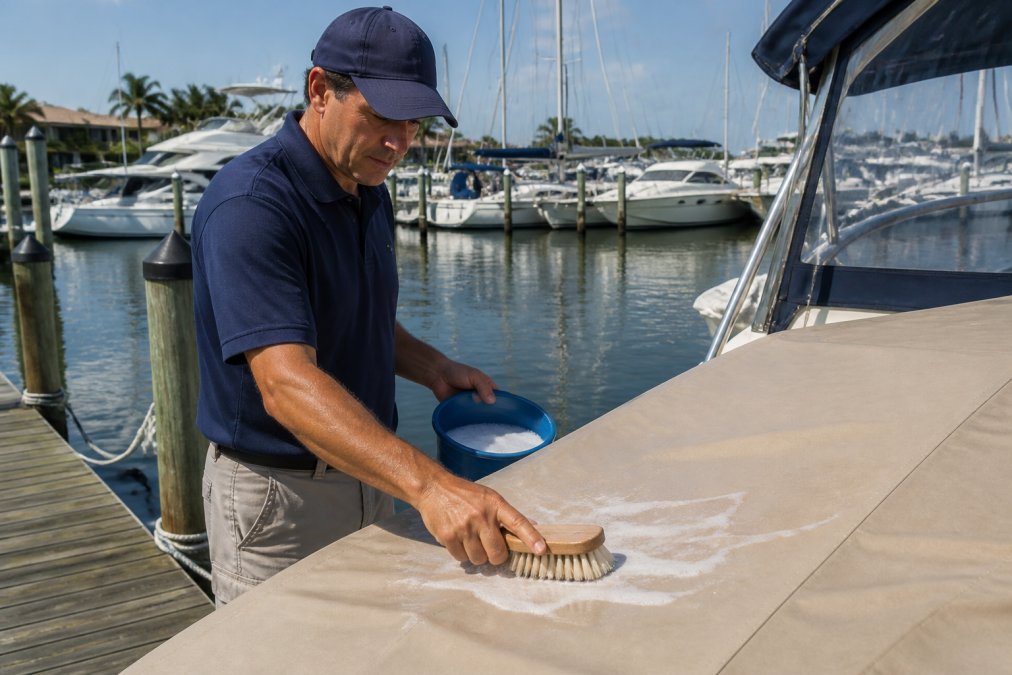
- Rinse salt residue after every outing when practical
- Wash with mild soap and water two to four times per season
- Address mildew promptly with a diluted bleach solution, then rinse thoroughly (How To Clean Sunbrella Upholstery Fabric)
- Re-proof water repellency with a fabric-safe treatment when water stops beading
- Inspect and re-stitch seams before they separate
Repair, Patching, and When to Replace Marine Canvas
Most marine canvas damage is repairable long before replacement is necessary. Small tears, worn binding, and failed stitching can all be fixed, and a professional re-stitch can add years to a cover that still has strong fabric. Replacement makes sense when the acrylic itself has thinned, when UV degradation has made the weave brittle, or when repairs would cost more than a new panel.
Do not ignore a single pulled seam. One failed stitch line lets wind load the next stitch, and a small opening can become a shredded cover in a single storm. A quick re-stitch now is far cheaper than a full replacement later.
Cost Per Year: Is Sunbrella Worth It Over Time?
Sunbrella’s cost per year of service is usually lower than cheaper canvas, even though the upfront price is higher. The reason is simple arithmetic: a cover that lasts a decade costs less annually than one that needs replacing every three or four years, and the better material also holds its appearance, which protects resale value on the boat.
The Cost-Per-Year Math
Most boat owners compare the price of a roll or a finished cover, not the price per season of use. A more useful comparison is total cost divided by expected years of service. The pattern below uses typical relative pricing, cheaper canvas usually runs a fraction of the cost of solution-dyed acrylic, but it also fails sooner:
| Fabric tier | Relative upfront cost | Expected service life | Relative cost per year |
|---|---|---|---|
| Economy canvas (surface-dyed, lighter thread) | Low | 3-4 years | Higher |
| Mid-grade marine canvas | Medium | 5-7 years | Middle |
| Solution-dyed acrylic (Sunbrella) | High | 8-12 years | Lowest |
What the Upfront Price Does Not Include
Three costs sit outside the sticker price and quietly favor the longer-lived fabric:
- Re-stitching labor. A cheaper cover may need a full re-stitch at year three or four. If you pay a shop to do it, that labor can approach the cost of the original cover. A Sunbrella cover typically needs its first re-stitch later, and the fabric is still worth re-stitching when it happens.
- Replacement labor and downtime. Every replacement means measuring, ordering, waiting, and re-fitting. That is time off the water.
- Appearance and resale. Faded, chalky canvas reads as a neglected boat. Colorfast fabric that still looks sharp at year eight supports the boat’s presentation at survey and resale.
When the Cheaper Fabric Actually Wins
There are honest cases where the premium fabric is not the right call:
- A cover for a boat you plan to sell within two seasons.
- A small, easily replaced item where the fabric cost is trivial and the labor is the real expense.
- A strictly shaded or indoor application where UV exposure is minimal and the acrylic’s main advantage is wasted.
Price the material by expected years of service, not by the tag on the roll. The cheaper canvas that fails in year three is the expensive choice. Ask your fabricator for the expected service life of the specific fabric and thread they are quoting, then divide.
Conclusion
Choosing the right fabric for marine environments is really a question of how you want to spend your maintenance budget: steadily on cheap replacements, or once on a material that holds up. Sunbrella fabric durability for boats is well established, and with routine cleaning and timely re-stitching, a quality cover can serve for a decade or more.
Frequently Asked Questions
How long does Sunbrella fabric typically last on a boat?
Sunbrella marine fabric usually lasts 8 to 12 years on a boat when it is cleaned regularly and repaired promptly. Solution-dyed acrylic fibers hold color well against UV exposure, and the fabric resists mildew and stains. The lifespan shortens with constant saltwater exposure, harsh cleaners, or skipped maintenance. Stitching and seams often fail before the fabric itself, so inspect them yearly. A to Z Awnings & Marine Canvas backs Sunbrella material with a 10-year warranty on custom marine work.
Does Sunbrella fabric fade in saltwater environments?
Sunbrella resists fading well because the pigment is added to the acrylic fiber before it is spun, not applied as a surface dye. That means color runs through the whole thread rather than sitting on top of it. Salt residue and sun still wear on any fabric over years, so rinse canvas with fresh water after saltwater exposure and clean it with mild soap. Regular care keeps color fastness high and slows weathering on bimini tops and boat covers.
Is Sunbrella better than vinyl for marine upholstery?
It depends on the use. Sunbrella breathes, feels like woven fabric, and resists fading and mildew, which suits boat covers, bimini tops, and cushions that sit in direct sun. Marine vinyl wipes clean easily and handles spills and heavy foot traffic, so it works well for seats that get constant contact. Many boat owners combine both: Sunbrella for canvas and covers, vinyl for high-wear seating. Talk to a marine fabricator about which fits your layout.
How do I clean Sunbrella marine fabric without damaging it?
Brush off loose dirt, then wash with mild soap and lukewarm water using a soft brush. Rinse thoroughly with fresh water and let the fabric air-dry fully before stowing. For mildew, a diluted bleach solution works on solution-dyed acrylic, but rinse it completely afterward. Avoid stiff brushes, harsh solvents, and machine drying. Clean bimini tops and covers two to three times a season, and more often in salt air, to protect fiber integrity and extend fabric longevity.