


Table of Contents
- What Makes Awning Fabric Perform in Florida’s Climate
- Fabric Comparison: Acrylic, Polyester, and Vinyl
- Why Do Outdoor Awnings Fade? The Science of UV Degradation
- Sunbrella vs Tempotest vs Sattler: Which Brand Holds Up Best
- How to Clean Outdoor Awning Fabric Without Damaging It
- Water Repellency, Breathability, and Fire Ratings Explained
- Energy Savings and HOA Compliance for Florida Awnings
- Conclusion: Choosing the Right Fabric for Your Project
- Frequently Asked Questions
Last Updated: September 21, 2026
What Makes Awning Fabric Perform in Florida’s Climate
Choosing the best awning fabrics for Florida comes down to one question: can these awning fabrics survive intense sun, salty air, and year-round humidity without fading, rotting, or tearing? At A to Z Awnings & Marine Canvas, material selection matters more here than almost anywhere else in the country.
The Four Stressors: UV, Salt, Humidity, and Heat
UV radiation breaks down the dyes and fibers in low-grade fabric, causing fade and weakening the weave over time. Salt air accelerates corrosion on hardware and can degrade stitching. Humidity feeds mold growth and mildew if moisture gets trapped. Heat adds constant thermal stress that shortens the life of any material that can’t handle it.
Fabric Comparison: Acrylic, Polyester, and Vinyl
Three fabric families dominate the market, and each handles the four stressors differently. Solution-dyed acrylic leads for color retention and breathability. Polyester composites cost less but fade faster. Vinyl-coated fabrics resist water well but trap heat and moisture.
Solution-Dyed Acrylic vs. Polyester Composite vs. Vinyl-Coated
Solution-dyed acrylic has pigment added to the fiber before it’s spun, so color runs all the way through. That’s why it resists fade so well. It also breathes, which helps prevent mildew.
| Fabric Type | Fade Resistance | Breathability | Mildew Risk | Best For |
|---|---|---|---|---|
| Solution-dyed acrylic | High | High | Low | Sun-facing patios, coastal homes |
| Polyester composite | Medium | Medium | Medium | Budget residential projects |
| Vinyl-coated | Medium | Low | Higher | Marine covers, waterproof needs |
Why Do Outdoor Awnings Fade? The Science of UV Degradation
Outdoor awnings fade because UV radiation breaks the chemical bonds in fabric dyes and fibers, a process called UV degradation. Surface-dyed fabrics lose color first; solution-dyed fabrics resist it because the pigment is locked inside each fiber rather than sitting on top.
How Solution-Dyed Pigments Resist Color Loss
When pigment is added during fiber production, there’s no surface layer to wash or wear away. Color fastness stays high even after years of sun exposure. That’s the core reason solution-dyed acrylic holds up so well in direct sun.
A common mistake is judging fabric by feel alone. A soft, thick-feeling fabric can still be surface-dyed and fade within a season. Ask specifically whether the fabric is solution-dyed before you buy.
Sunbrella vs Tempotest vs Sattler: Which Brand Holds Up Best
All three are respected solution-dyed acrylic brands, and each has loyal users. The useful comparison is not the logo, it is the specific fabric line, the weave weight, and how that construction behaves under salt air, humidity, and sustained UV.
| Brand | Typical Construction | Standout Strength | Trade-off to Know |
|---|---|---|---|
| Sunbrella | Solution-dyed acrylic, fluoropolymer finish | Widest color/pattern range, published care guidance | Finish needs re-treatment over time in salt air |
| Tempotest | Solution-dyed acrylic | Consistent color matching across large runs | Different drape affects retractable tension |
| Sattler | Solution-dyed acrylic, often heavier weight | Wind resistance, shape retention | Heavier fabric can strain some retractable frames |
What Actually Matters More Than the Brand
Three variables outweigh brand choice in this climate:
- Weave weight and construction. A heavier, tighter weave resists wind load and holds shape longer. Lighter fabric is easier to retract but stretches and flaps sooner.
- Thread and stitching. UV and salt break down thread faster than fabric. Bonded or UV-stabilized thread on seams is the single most overlooked durability factor on any awning.
- Installation and tension. A well-installed solution-dyed acrylic from any of these makers will outperform a poorly installed bargain fabric every time. Correct tension prevents flapping, which is what tears fabric and pulls seams.
Brand loyalty matters less than fabric construction and installation quality. Ask for the specific fabric line, the weave weight, and the thread type before you compare prices.
Florida-Specific Trade-offs
Salt air attacks the water-repellent finish and the stitching before it attacks the color. That means the maintenance cycle, rinsing salt residue and re-treating the finish, extends fabric life more than upgrading from one premium brand to another. For fixed awnings in exposed coastal locations, the heavier Sattler-style construction often wins on wind resistance; for retractable awnings where weight and drape matter, Sunbrella and Tempotest lines are usually easier to live with.
manufacturer fabric care and warranty documentation
How to Clean Outdoor Awning Fabric Without Damaging It
Cleaning outdoor awning fabric is straightforward if you use mild soap, a soft-bristle brush, and plain water, then let it air dry fully. Harsh cleaners and pressure washers are the fastest way to strip water repellency and damage stitching.
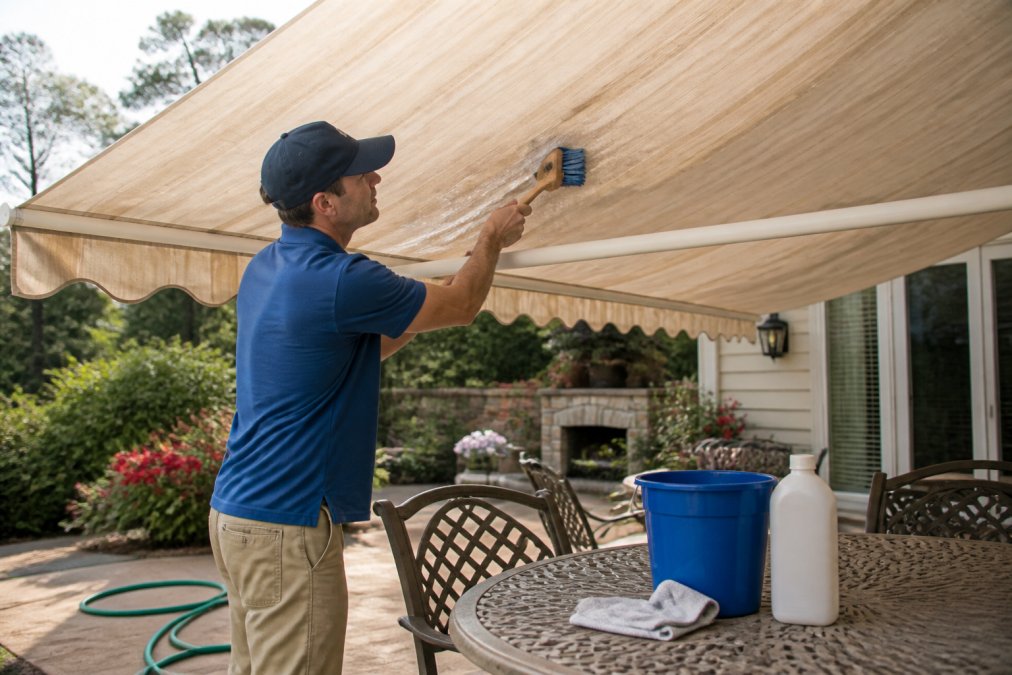
Here’s a simple cleaning routine:
- Brush off loose dirt and debris with a soft brush
- Mix mild soap with lukewarm water in a bucket
- Scrub gently in the direction of the weave
- Rinse thoroughly with a garden hose
- Let the fabric dry completely before retracting
- Repeat two to three times per year, more in salt-air zones
Mildew, Salt Air, and Stitching: What to Watch
Mildew shows up as dark spots that won’t rinse away. Salt air leaves a residue that attracts moisture and can corrode hardware. Stitching is the weak point on any awning: UV and salt break down thread faster than fabric, so inspect seams each season.
Water Repellency, Breathability, and Fire Ratings Explained
Water repellency and waterproofing are not the same thing. Water-repellent fabric sheds rain but still lets air move through. Waterproof fabric blocks water completely but traps moisture and heat underneath.
Never assume a fabric is fire-rated. Commercial awnings and some residential installations require documented fire retardant classification. Skipping this step can fail inspection and force a costly re-do.
Energy Savings and HOA Compliance for Florida Awnings
This is the section most generic awning guides skip entirely, and it is where local homeowners get burned, literally on cooling costs and figuratively on HOA fines.
How Awnings Cut Cooling Load
An awning works by intercepting solar radiation before it reaches the glass or the patio surface. When direct sun hits a window, that energy enters as heat gain and your air conditioner has to remove it. Shade the window from the outside and the heat never enters.
- Orientation. West- and south-facing windows gain the most heat in the afternoon. Awnings on those exposures deliver the largest cooling benefit.
- Coverage. A deeper projection shades more glass and more wall. A shallow awning that only covers the top third of a window does far less.
- Fabric and color. A light-colored, tightly woven fabric reflects more solar energy and stays cooler to the touch than a dark, open weave. Breathable fabric also lets hot air escape from underneath rather than trapping it against the wall.
For the biggest cooling benefit, prioritize awnings over west- and south-facing glass, and choose a light-colored, tightly woven solution-dyed acrylic. Dark fabric absorbs heat and radiates it back toward the wall.
HOA Rules: What to Check Before You Order Fabric
Many communities restrict awning color, style, and even whether retractable or fixed designs are allowed. Because fabric color is the hardest thing to change after installation, confirm HOA approval before you commit to a color or pattern.
A practical checklist:
- Request the HOA’s architectural guidelines in writing
- Confirm approved colors and patterns, not just “earth tones”
- Confirm whether retractable and fixed awnings are treated differently
- Confirm whether a permit is required from your local building department
- Get written approval before ordering custom fabric
Fire Ratings and Code Compliance
Commercial awnings and some residential installations require documented fire retardant classification. Always confirm the fabric’s fire retardant classification meets local building code before ordering. Skipping this step can fail inspection and force a costly re-do, and because fabric is custom-cut, a failed inspection often means buying the material twice.
The Sustainability Angle Most Guides Ignore
Solution-dyed acrylic is a long-life material, and that is its main environmental advantage: a fabric that lasts 10-plus years replaces several short-life alternatives. When it does reach end of life, disposal options are limited, most awning fabric is not widely recyclable through curbside programs, and acrylic does not biodegrade quickly in landfill. The practical takeaway is to buy for longevity, choose a color and pattern you will not want to change, and ask your fabricator whether offcuts and retired fabric can be diverted from the waste stream.
Best for coastal and waterfront properties where salt air corrosion and humidity control are the top concerns.
Conclusion: Choosing the Right Fabric for Your Project
The best awning fabric for your project balances fade resistance, breathability, mildew inhibition, and code compliance. Solution-dyed acrylic remains the strongest all-around choice for Florida’s climate, especially when paired with proper installation and a real maintenance cycle.
Frequently Asked Questions
What is the best fabric for outdoor awnings in high-UV climates?
Solution-dyed acrylic is the top choice for high-UV areas. The pigment is added to the fiber before it’s spun, so color holds up far longer than surface-dyed alternatives. Brands like Sunbrella, Tempotest, and Sattler all offer solution-dyed acrylic lines with strong fade resistance and UV protection. Look for fabric weight around 9 to 11 ounces per square yard for a good balance of durability and flexibility.
Is there a better outdoor fabric than Sunbrella for humidity resistance?
Sunbrella performs well in humidity, but some buyers prefer vinyl-coated polyester for extreme moisture exposure because it resists mold and mildew without needing applied treatments. The trade-off is breathability: vinyl-coated fabrics trap heat and condensation more than acrylic. For most Florida patios, solution-dyed acrylic with proper tension and airflow works well. For marine enclosures or constantly wet areas, vinyl-coated polyester is worth considering.
How do acrylic fabrics compare to vinyl for residential awnings?
Acrylic fabrics breathe, resist fading, and feel like traditional canvas, which suits residential patios and decks. Vinyl-coated fabrics are waterproof, easy to wipe clean, and resist mildew, but they don’t breathe as well and can feel stiff. Acrylic is usually the better pick for residential shade where appearance and airflow matter. Vinyl makes more sense for commercial kitchens, boat covers, or areas exposed to constant moisture.
What maintenance is required for high-performance awning fabrics?
Brush off loose dirt, then wash with mild soap and lukewarm water using a soft brush. Rinse thoroughly and let it air-dry fully before retracting. For mildew, use a diluted bleach solution (no more than one cup per gallon of water), let it soak briefly, then rinse. Avoid harsh detergents, pressure washers, and machine drying. Inspect stitching and hardware twice a year, and re-tension the fabric if it sags. Consistent cleaning extends fabric life significantly.
Picking the right fabric is only half the battle; installation and ongoing care decide whether your awning lasts five years or fifteen. A to Z Awnings & Marine Canvas builds custom awnings with hundreds of Sunbrella fabric options, a 10-year workmanship warranty, and a 10-year material warranty on Sunbrella. Call us today for a free estimate and get a shading solution made for your space.